Part 2 of 9 — The Next Chapter: A Senior's Guide to the Years Ahead
In brief: Medicare generally does not cover long-term custodial care — the everyday help most people eventually need with things like bathing, dressing, and daily living. Long-term care can cost anywhere from $4,500 to $13,000 a month depending on the type of care and where you live. Roughly 70% of Americans turning 65 today will need some form of long-term care during their lives, averaging about three years of care. Planning options generally include self-funding, traditional long-term care insurance, hybrid life insurance and LTC policies, or annuities with LTC riders. Costs are typically lower when planning is done earlier in life.
$7,000 a month. That's roughly what a year of long-term care costs the average American who ends up needing it. Some places it's $5,000. Some places it's $13,000. But the national median lands close to that $7,000 mark.
Medicare doesn't cover it.
That's the whole problem in one sentence. Most Americans over 60 assume Medicare is the safety net for whatever comes next, including the help they might eventually need with everyday life — bathing, dressing, getting up the stairs, taking medication on time. It isn't. Medicare covers medical treatment. The care most of us will actually need as we get older isn't medical. It's custodial. And custodial care sits almost entirely outside what Medicare will pay for.
The numbers behind that gap are worth a hard look. Most retirees skip this math because once you do it, you can't unsee it. But the math is also the only thing that helps you plan around it.
The number Medicare doesn't pay for: custodial care
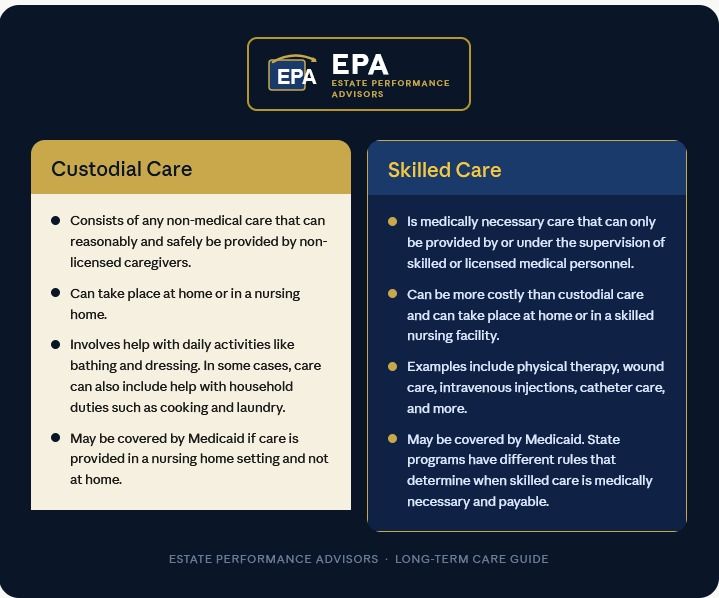
Custodial care is the help most older adults eventually need — assistance with bathing, dressing, eating, transferring from bed to chair, managing medications. None of it requires a doctor. All of it requires another human being.
Medicare will pay for skilled nursing care — the kind that requires a licensed nurse or therapist — for up to 100 days, and only after a qualifying hospital stay. After day 100, you're on your own.
For custodial care, Medicare pays essentially nothing. Whether the care happens in your home, in an assisted living facility, or in a nursing home, the bill is yours.
That's where the $7,000 figure starts. According to the 2025 CareScout Cost of Care Survey, median assisted living now runs around $6,200 a month. Median in-home care for 44 hours a week runs around $6,680. A semi-private nursing home room runs around $9,580. A private room runs around $10,800. Where exactly your number lands depends on where you live and the care you need, but $7,000 a month is a reasonable starting point for the conversation.
These are national medians from the 2025 CareScout survey. State-by-state variation can be significant, and half the country pays more than the median.
The number nobody plans for: 70% will need long-term care
Most people quietly assume they won't be the ones who need long-term care. The data says otherwise.
Roughly 70% of Americans turning 65 today will need some form of long-term care during their lives. About one in five — roughly 20% — will need care for five years or more, according to federal data from the Administration for Community Living. Women, who live longer on average, need it longer than men do.
That number is worth sitting with for a moment. If you and your spouse are both 65, the math says there's an extremely high chance at least one of you will need substantial help at some point. Planning around "we probably won't be the ones who need it" isn't really planning. It's a bet against a 70% probability.
The number behind the number: 3 years of care on average
The average length of long-term care need runs about three years.
Women average closer to 3.7 years. Men, around 2.2.
Three years of care at $7,000 a month is $252,000. Three years at the median nursing home rate is closer to $321,000.
That's not a worst-case scenario. It's the average.
The number that changes the conversation: how to fund $250,000+ of care
Once you look at $250,000 to $300,000 sitting on top of a retirement plan built to last 30 years, the question becomes: how do you protect against it?
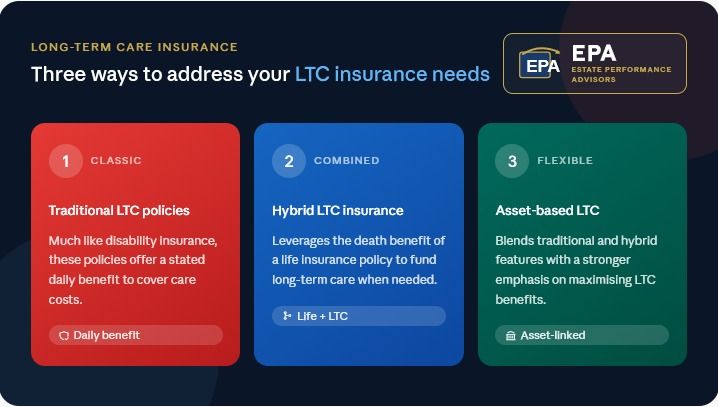
There are essentially four answers, and the right one depends on your assets, your health, and how comfortable you are with the math.
- Self-funding. Paying out of savings. This only really works if you have substantial assets and are willing to spend down a meaningful portion of your retirement plan if care is needed for an extended period.
- Traditional long-term care insurance. A policy you pay premiums on, and that pays for care if and when you need it. Costs have risen significantly over the past two decades, and many insurers have left the market, but coverage is still available for people in reasonable health.
- Hybrid life insurance and LTC policies. A life insurance policy with a long-term care benefit built in. If you need care, the policy pays for care. If you don't, your beneficiaries receive the death benefit. The "use it or lose it" risk of traditional LTC insurance disappears.
- Annuities with LTC riders. An annuity that pays more income if long-term care is needed. Lower upfront cost than insurance, but typically smaller benefits.
There's also Medicaid, which will eventually cover nursing home care for people who deplete their assets. But only after a five-year lookback period, and only after most of those assets are gone. It's a safety net, not a plan.
The number people forget about: the cost of waiting to plan
There's one more number worth knowing, and it cuts the other way. The cost of planning for long-term care at 60 is meaningfully lower than at 70. Hybrid policies in particular tend to be far less expensive when you're younger and healthier. Premiums in your early 60s can be a fraction of what they'd be a decade later — and a decade later, qualifying at all is no longer a given.
That's the part most people miss when they tell themselves they'll think about long-term care "eventually." Eventually has a price.
The bottom line
Long-term care is the single largest unplanned-for expense in most American retirements. Medicare doesn't cover it. Savings can be drained by it. And the longer the conversation gets put off, the more expensive the options become.
The math is uncomfortable. But it's also the entire reason the planning exists. If you've never had this conversation with someone who knows the products, the best time to have had it was five or ten years ago. The next best time is now.
Once the long-term care numbers are in front of you, the next thing worth checking is whether the life insurance policy you've been paying premiums on for 30 years might already hold part of the answer. We'll get into that next week.
Frequently Asked Questions About Long-Term Care Costs and Coverage
Does Medicare cover long-term care?
Generally no. Medicare typically covers short-term skilled nursing care after a qualifying hospital stay, usually up to 100 days. It does not cover the custodial care most people eventually need — help with everyday activities like bathing, dressing, eating, and managing medications — whether that care happens at home, in assisted living, or in a nursing home.
What is the difference between skilled care and custodial care?
Skilled care is medical care generally requiring a licensed nurse or therapist. Custodial care is non-medical assistance with activities of daily living, such as bathing, dressing, transferring from bed to chair, and managing medications. Medicare covers limited skilled care in specific situations. Medicare typically does not cover custodial care.
How much does long-term care cost in the United States?
Costs vary significantly based on the type of care and location. National medians generally range from around $5,000 to $5,500 a month for assisted living, roughly $6,300 for in-home care at 44 hours a week, around $9,000 for a semi-private nursing home room, and over $10,000 for a private nursing home room. State-by-state variation can be significant.
How likely am I to need long-term care?
Roughly 70% of Americans turning 65 today are expected to need some form of long-term care during their lives, according to federal data. About one in seven need it for five years or more. Women, who live longer on average, typically need it for longer periods than men.
How long does the average person need long-term care?
The average length of long-term care need is generally about three years. Women average closer to 3.7 years and men closer to 2.2 years, though individual situations vary significantly based on health, family history, and other factors.
What are the main ways to pay for long-term care?
There are generally four main options: self-funding through personal savings, traditional long-term care insurance, hybrid life insurance and LTC policies that pay for care if needed or a death benefit if not, and annuities with LTC riders. Medicaid may also cover nursing home care for those who deplete their assets, but only after a five-year lookback period and generally only after most assets are gone.
Is long-term care insurance worth it?
It depends on your situation. Traditional long-term care insurance can help cover costs that could otherwise deplete retirement savings, but premiums have generally risen over the past two decades and coverage varies. Hybrid policies address the "use it or lose it" concern of traditional LTC insurance by providing either care benefits or a death benefit. Deciding which option fits generally requires a personal evaluation with a qualified professional.
When should I start planning for long-term care?
Generally, the earlier the better. Long-term care insurance and hybrid policies tend to be less expensive when purchased at younger ages, and qualifying medically can become more difficult as people get older. Many planning professionals suggest starting the conversation in your 50s or early 60s.
Next: Part 3 — You're 65 and the mortgage is paid. Do Americans still need life insurance?